Blogging with Google Gemini
Building a Kubernetes cluster on a stack of Raspberry Pi 5s is the technical grunt work. But turning my build into a readable blog series? That’s where the real creative pain starts. Turns out, I could continue my AI experiment, which is how my content planning partnership with Gemini took off.

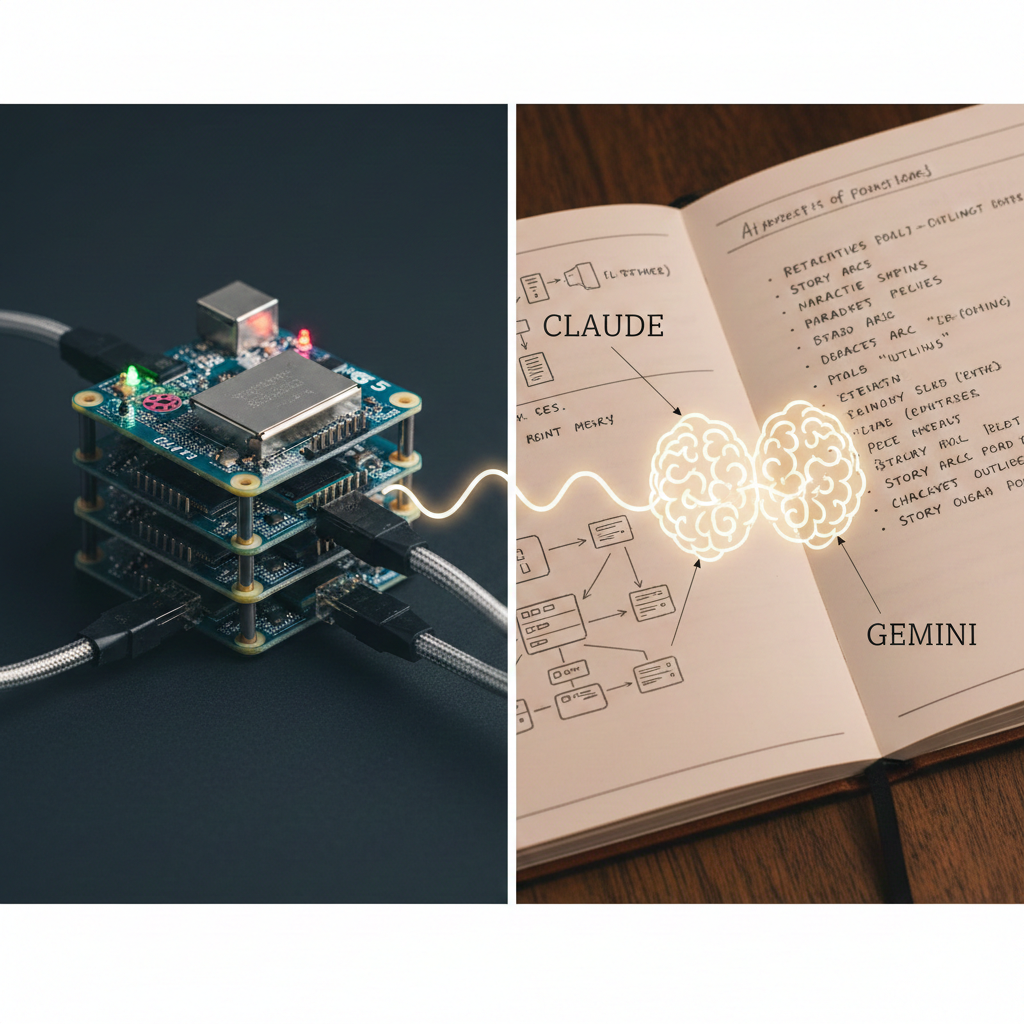
Table of Contents
The Two Brains: How AI Refined My Home Lab Narrative
Building a Kubernetes cluster on a stack of Raspberry Pi 5s is the technical grunt work. But turning my build into a readable blog series? That’s where the real creative pain starts. Turns out, I could continue my AI experiment, which is how my content planning partnership with Gemini took off.
I had Claude locked down as the technical expert—generating technical details and expediting my build progress. I trust Claude to help me knows which flags, commands, and configs to use. But I enlisted Gemini to act as my content planning partner—the one who could make sense of the mess for a reader. It’s a classic division of labor: Claude for the execution, Gemini for the narrative. And frankly, I feel it has helped me consolidated my thoughts, notes, and approach into something readable.
My current focus was Phase 1, the core cluster build. We originally cooked up a plan for four separate posts, but as I got my hands dirty, the lessons and errors started blurring together. The hardware setup, the NAS configuration, the K3s core, and the networking all felt like one continuous effort. I realized trying to stretch that into four separate posts would feel diluted and boring. So, I condensed it all into one comprehensive article: Part 1: Cluster Build.
The Content Architect's Intervention
Gemini’s job was simple: stop me from writing a technical manual and start writing a story. It helped me step away from the terminal and figure out where the narrative flow needed to go, not just for Part 1, but for the entire series.
When I gave Gemini Claude’s technical blueprint, my ask was simple. Help me identify the themes I should focus on and key opportunities to highlight important information or milestones. It immediately flagged areas where a simple command wouldn't cut it. Take the K3s control-plane install command. Claude had the command correct, including the crucial --node-taint flag. That flag ensures no application pods run on the control node—it keeps the brain focused on coordination, which is critical for a small control-plus-worker cluster.
Claude didn’t explain why it was there. But Gemini put the setting in its content plan and called it out, demanding I explain the flag’s importance to the reader. Claude has the setting correct, Gemini gave weight to its importance.
That one little detail sums up the whole partnership. Claude handles the functionality; Gemini handles the context. By putting the spotlight on those configuration choices, Gemini made sure the post wasn’t just a copy/paste guide, but a real deep dive into the "why."
Refining for the Real World (AKA, the Errors)
The plan always looks great on paper, but a home lab build is where the wheels usually fall off. My interactions with both AIs helped me solve the problems and also highlight the path to achieving milestones. I decided to scrap Gemini's four-part Phase 1 blog series. Instead, I wrote the Part 1 post focusing on Lessons Learned and then the activities to get the cluster up and running. Gemini's original plan helped ensure I didn't lose sight of technical milestones—from the static IP configuration, to the MetalLB and Traefik networking—while articulating the single, logical sequence.
Visuals that Matter
Good technical posts need visuals that actually explain something. Gemini helped outline potential visual assets, ensuring I didn't forget to capture something along the way. Beyond the basic unboxing shots, the most important screenshots were the confirmation steps: the successful command proving the NVMe was mounted , and the ultimate three-way terminal shot of the kubectl get nodes output with all three Pis showing "Ready". That final screenshot is the first major software win, and Gemini ensured it was framed that way.
The Blueprint is Set
With Part 1 nailed down, Gemini has provided a clear roadmap for the rest of the series. It's about turning those technical phases into an exciting series arc:
- The Spark: Imagining a Raspberry Pi 5 Cluster
- Part 1: Core Cluster Hardware Build and Initial Install
- Part 2: Services, Services, Everywhere!
- Part 3: The Final Layer - Hosting Ghost & The Great Migration
This dual-AI strategy focuses on the importance of establishing a "role"—one for the code, one for the content—and was exactly what I needed to transform a complex project into a cohesive, educational, and genuinely engaging narrative for the home lab community.